Mold inspection and removal, water damage drying
Mold removal in Los Angeles
Done behind plastic, and checked with clearance samples at the end. Removal follows the findings, so it starts once the leak has been fixed.
There’s no charge for the inspection. You keep the map and our findings, whoever does the work.
Water coming in now?A crew can be there within the hour, day or night.Call (310) 857-2520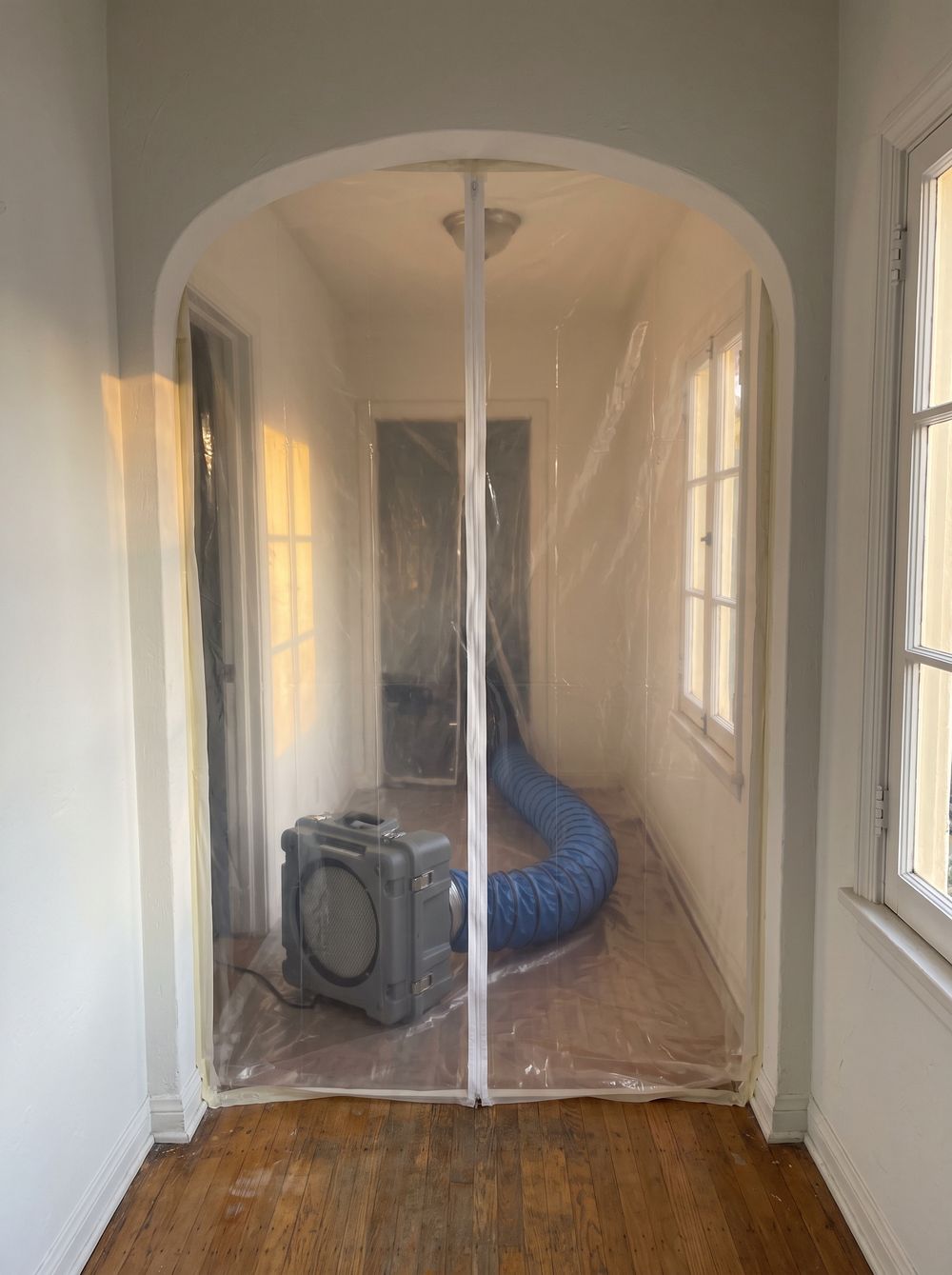
We close the work area off with plastic, and you keep using the other rooms. The free inspection comes first, so the plan starts from a map that shows where the moisture is and how far it reaches.
When growth needs removing
- Spots that return to the same patch after cleaning
- Growth spreading across the back wall of a closet or a ceiling corner
- Drywall that stays damp, or crumbles along its bottom edge
- Mustiness that returns within days of airing the room out
- Growth on the subfloor or the joists over a crawl space
- Growth that followed a burst supply line under a sink
How removal goes
- The leak is fixed first. Your plumber or roofer fixes it, on their own bill. The map shows them the one place to open.
- Sealing off the work area. Plastic sheeting goes up floor to ceiling around it, with a zippered door to come and go. An air scrubber with a HEPA filter draws air out of the enclosure, which keeps it at slightly lower pressure than the rooms outside it, so dust stays inside the plastic.
- What gets cleaned, and what comes out. Wood framing and tile usually clean up. Drywall and insulation that grew mold are usually cut out and bagged, because the growth goes into the material.
- Drying what stays. Framing left in place is dried until it reads like a dry wall in the same house.
- Clearance. Before the plastic comes down, we sample the air inside the work area and outdoors, and a lab compares the two. The plastic stays up until the result passes, and you get a copy of the lab’s report.
- Putting the walls back. Written up as its own scope once the area passes clearance.
No wall gets opened until you’ve seen the map.
Your scope is drawn from the map, so every price on it points to a place in your house.
How many days
A closet or part of a bathroom wall usually takes a few days. A crawl space or several rooms can take one or two weeks, and the written scope gives you the days before you agree.
Most families stay put. If a bedroom or the only bathroom is inside the plastic, we plan the days around you.
What decides the price
Nothing starts until you sign the scope’s last line, the one that says yes. What moves the lines on it:
- The wall and ceiling area inside the inner rings, which is what comes out
- How hard it is to reach: a closet, a low crawl space or the attic
- How many rooms the plastic has to close off
- Days of drying for the outer rings
- Packing up and storing furniture, if a room has to be emptied
Insurance and paying
Your adjuster sees the same map and findings you keep, with the source marked and every reading beside it. Tell us who the adjuster is, and we’ll send both to them.
Financing is available for work insurance doesn’t cover. Ask when we go through the scope.
A year on the treated area
Regrowth there is covered for one year from the day it passes clearance, written into your scope. If a clearance sample fails, we clean again and retest at no charge. A new leak isn’t covered.
What people ask before removal
Will paint cover it?
Paint hides the mark for a while. If the wall behind it is still wet, the stain usually comes back through the new coat, and the growth stays where it was.
Where does the furniture in that room go?
If a room has to be emptied, packing up and storing the furniture is its own line on the scope. It’s taken out of the work area and stored until the rooms are put back.
Another company already inspected. Will you look again?
Yes, and it’s still free. Send their report when you book. We read the walls ourselves, because your scope is drawn from our map.
Seen it or smelled it? Got a note from an inspector? Book an inspection.
Mold questions answered the same working day. After 5pm, first thing next morning.