Mold inspection and removal, water damage drying
Mold inspection in Los Angeles
Smelled something musty, or found spots in a closet? We follow the moisture back to where it starts, then tell you in writing if there’s work to do.
There’s no charge for the inspection. You keep the map and our findings, whoever does the work.
Water coming in now?A crew can be there within the hour, day or night.Call (310) 857-2520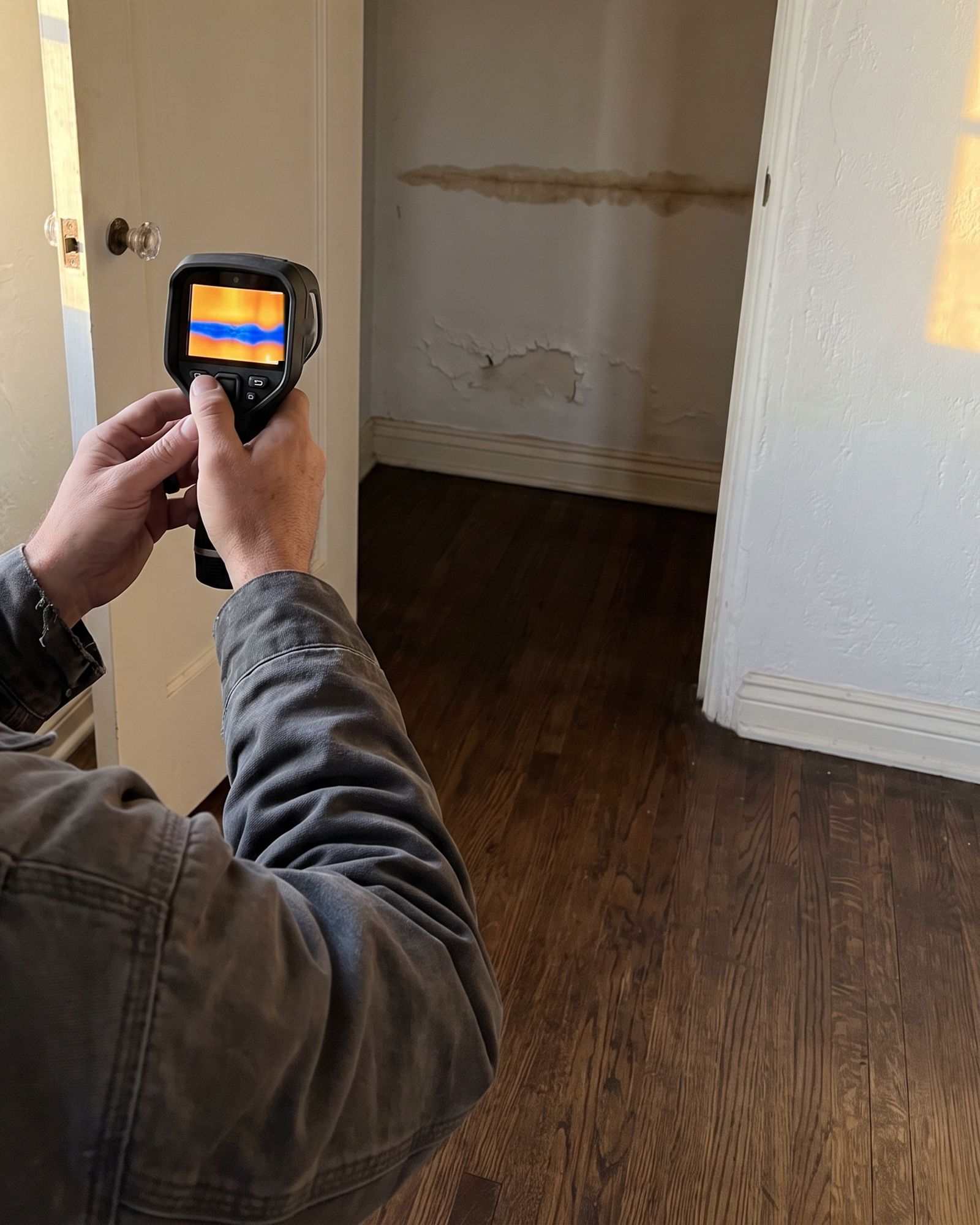
Mold usually grows where a wall or a floor has stayed damp for weeks. So we inspect for the water first. Once you know where it comes from, the growth makes sense, and the findings can say what to do about it.
Why people book an inspection
- A closet or a bathroom smells damp, and nothing shows
- Dark spots on a ceiling, a closet wall or the caulk around a tub
- Paint bubbling low on a wall near a shower or a toilet
- A stain that came back through fresh paint
- A home inspector noted possible moisture, and escrow is open
- A leak was fixed months ago, and you want to know the wall is dry
How the inspection goes
- We walk the house with you, starting at the spot that worried you.
- One wall known to be dry is read first, so every number has a baseline.
- A moisture meter and a thermal camera go over the walls and ceilings around the spot, then the rooms beside it. A mark on a wall often appears a room or two from the leak that made it.
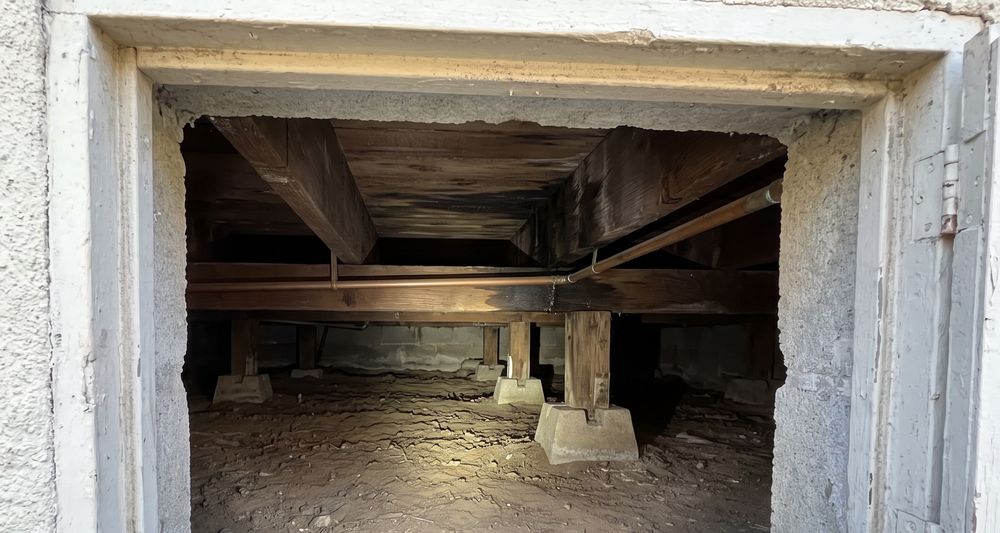
- If your house sits over a crawl space, or the room is under an attic, that gets looked at too.
- The readings lead back to the source, which is marked on your map.
- Before we leave, we go through the map with you room by room. Then we tell you whether there’s work to do.
No wall gets opened until you’ve seen the map.
Your scope is drawn from the map, so every price on it points to a place in your house.
When samples are taken
Usually the readings and what we can see are enough. Samples earn their cost when a smell has no visible cause, or when a sale or a landlord needs it on paper. When samples would settle something, we tell you why and what they cost before taking any.
If the growth is in plain view and the cause is clear, a sample won’t change the plan.
What you’re handed
Your rooms drawn out, with every reading where we took it, the source marked and the dry wall each number is read against. Beside the map, the findings answer four questions in plain sentences: what we found, where it comes from, whether there’s work to do and what we’d do first.
If the stain is old and the wall reads dry, we tell you to leave it as it is. That goes in your findings in writing, which helps if a buyer asks about the mark later.
What decides the price
If there’s work to do, these move the lines on your written scope:
- How much drywall and insulation sits inside the inner rings
- Where it is: a closet, a bathroom wall, a crawl space or the attic
- How long the outer rings take to read like the dry wall
- Lab samples, if they would change the answer and you say yes to them
Your plumber or roofer fixes the leak, on their own bill. If it is mold, removal follows the findings, and putting the walls back is written up as its own scope once the area passes clearance.
Questions about mold inspections
Do you inspect condos and apartments?
Yes. Your unit is read first. If the readings point to a wall or a ceiling you share, the map shows where, so whoever looks after the building can see it too.
We’re in escrow. Can you work to the closing date?
Give us the date when you book, with the page of the report that names the problem. We read that spot first, then the rooms around it. Agents can book for a client. Name everyone who should get the map, and we’ll send it to each of them.
Seen it or smelled it? Got a note from an inspector? Book an inspection.
Mold questions answered the same working day. After 5pm, first thing next morning.