Mold inspection and removal, water damage drying
Hidden water and leak detection in Los Angeles
Behind walls and under slab floors. We follow the readings back to where the water starts, so your plumber opens the wall or the floor in one place.
There’s no charge for the inspection. You keep the map and our findings, whoever does the work.
Water coming in now?A crew can be there within the hour, day or night.Call (310) 857-2520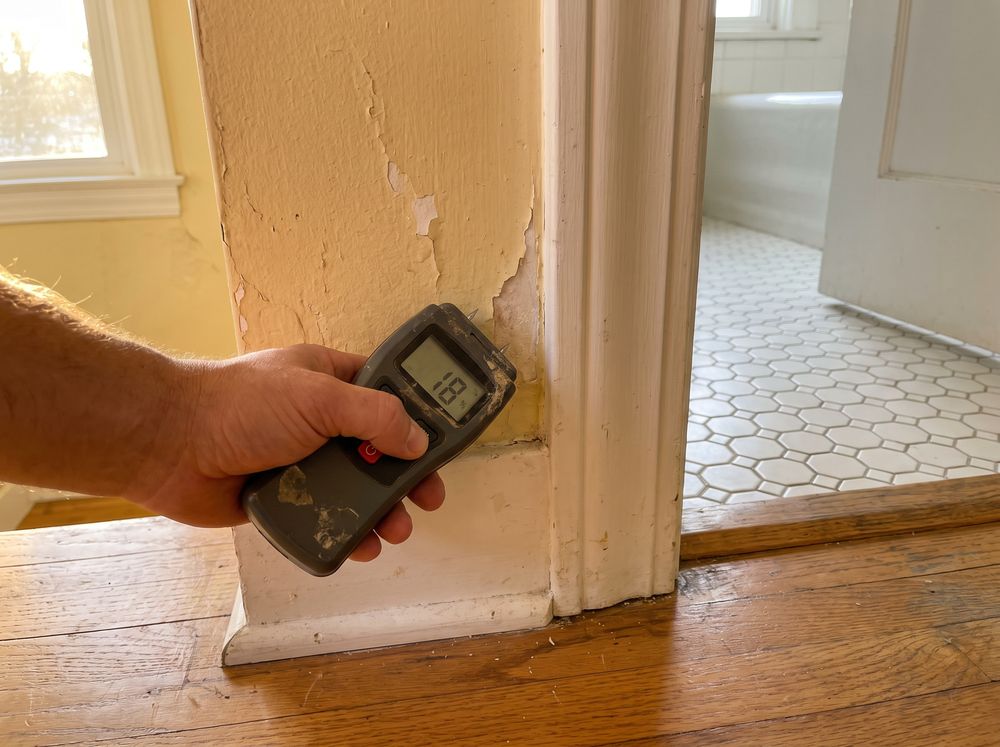
Water runs along framing and pipes before it shows. The place it gets in and the place you see it can be a room or two apart, and a leak hidden in a wall can run for weeks while the paint outside it looks fine.
Signs of water you can’t see
- One patch of floor that feels warm under bare feet
- Flooring that lifts, cups or opens at the seams
- Water bills climbing with nothing new running
- The water meter still turning with every tap in the house off
- A ring on the ceiling under a bathroom
- A room over a crawl space that smells musty
- Paint bubbling just above a baseboard
Where water hides in older LA houses
Under a slab floor
Plenty of postwar ranch houses sit on a concrete slab, with the water lines running beneath it. Water from a leak there stays under the floor, so it’s often felt before it’s seen: a warm patch underfoot, or flooring that starts to lift. We map the warm area so the plumber opens the floor in one place.
Inside plaster and lath
Plaster walls take time and money to open and patch well. We read through them first, and only the section the numbers point to gets opened.
Over a crawl space
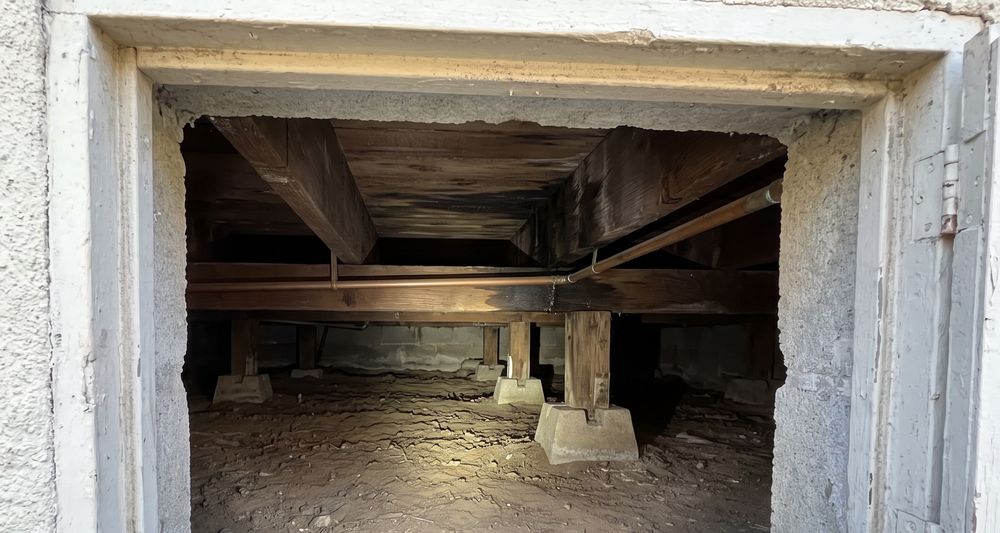
A dripping supply line beneath the floorboards can soak the subfloor long before anything shows upstairs, and a smell in the room above is often the only clue. We go in through the access hatch with a flashlight and a moisture meter.
Behind a shower
A shower valve or a shower pan may leak only while the water runs. The wall dries a little between showers and never all the way. The readings peak right at the leak, and the map marks that spot.
No wall gets opened until you’ve seen the map.
Your scope is drawn from the map, so every price on it points to a place in your house.
How we find it
- We start where you noticed it and work outward.
- We read a wall we know is dry first, so every number has a baseline.
- On the thermal camera a wet patch usually shows cooler than the dry wall around it. The meter then checks it point by point, before anything is opened.
- The readings lead back to the source, which is marked on your map with the one place to open.
- Before we leave, we go through the map with you room by room.
Who opens it and fixes it
Your plumber or roofer fixes it, on their own bill. The map shows them the one place to open.
Once the repair is done, the wet zones on your map are dried in place or taken out. Nothing starts until you sign your written scope.
What decides the price
If the map shows work to do, the price follows what the water reached:
- How far the wet area reaches from the source, ring by ring
- What it soaked: drywall and insulation, plaster, subfloor, or flooring over a slab
- How many days the outer rings take to read like the dry wall
- Whether growth has started, which adds sealing off the area and clearance samples
Seen it or smelled it? Got a note from an inspector? Book an inspection.
Mold questions answered the same working day. After 5pm, first thing next morning.